
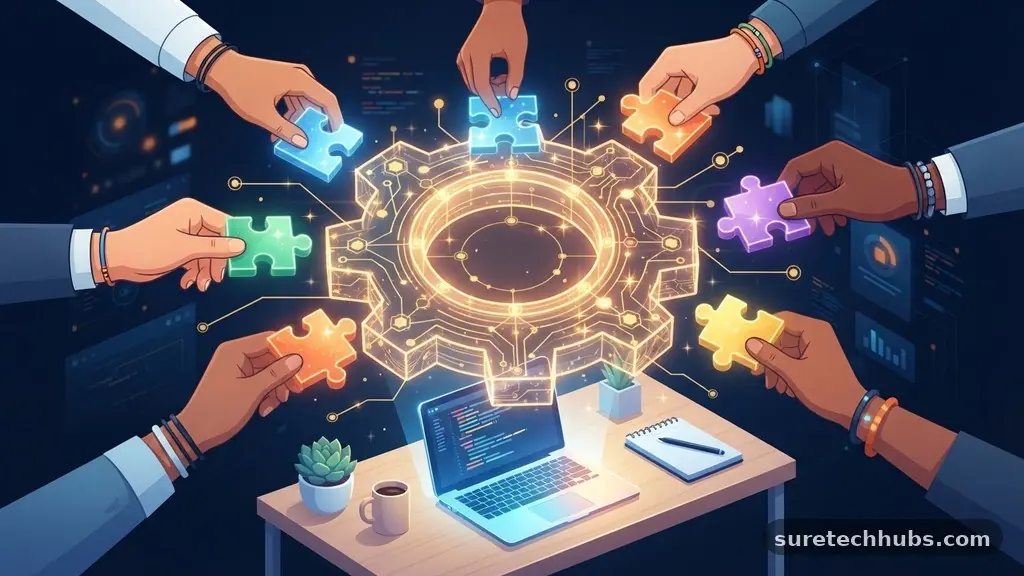
Understanding open-source software and why does it matter involves looking at the fundamental shift in how digital tools are built and shared today. Unlike proprietary programs that lock users into specific ecosystems, open-source software provides full access to the underlying instructions, allowing anyone to study, modify, and distribute the code freely.
This collaborative approach has become the bedrock of the modern internet, powering everything from massive cloud infrastructure to the smartphone in your pocket. By examining the impact of transparent development, you will see how these projects foster innovation, improve security, and democratize access to high-quality technology for individuals and global corporations alike.
Defining the Open Source Philosophy
At its core, the term refers to computer programs where the creator makes the source code available for anyone to inspect, modify, and enhance. If you purchase a proprietary application, you are essentially buying a “black box” where the internal logic remains hidden and controlled by a single vendor. In contrast, open-source software invites public scrutiny, which is the primary reason why it has gained such immense traction in the professional software development community.
When developers talk about this model, they are describing a shift in power from a single entity to a community-driven ecosystem. This ensures that the longevity of a tool is not tied to the financial health or shifting priorities of one corporation. If a company decides to discontinue a closed product, the users are often left with no recourse, whereas an open project can be maintained by its community indefinitely.
The Core Benefits of Open Development
The most significant advantage of this model is the speed of innovation driven by collaborative efforts. Thousands of developers across the globe can work on the same codebase simultaneously, identifying bugs and suggesting improvements in real-time. This collective intelligence often leads to a more stable and feature-rich final product compared to what a closed team could produce in isolation.
Security represents another major pillar of this movement. Many people mistakenly believe that hiding code makes it safer, but the opposite is often true. Because the code is open, it undergoes constant peer review from independent security researchers who find and patch vulnerabilities long before they can be exploited.
| Feature | Proprietary Software | Open-Source Software |
|---|---|---|
| Source Code Access | Restricted | Available to All |
| Modification Rights | None | Encouraged |
| Cost Structure | License Fees | Often Free |
| Community Support | Vendor Only | Crowdsourced |
How Licensing Shapes the Landscape
While the code is often free to use, it is governed by specific legal frameworks known as licenses. These documents define the rules for how the software can be redistributed, modified, and used in other projects. Understanding these licenses is essential for anyone integrating these tools into their own work or business operations.
Some licenses, like the GNU General Public License (GPL), require that any derivative work you create must also be released under the same open terms. Other, more permissive licenses allow developers to incorporate the code into proprietary products without having to release their own additions to the public. These legal distinctions ensure that the spirit of collaboration remains intact while providing necessary protections for contributors.
Common License Categories
- Permissive Licenses: These allow maximum flexibility, permitting users to take the code and use it in private or commercial closed-source projects.
- Copyleft Licenses: These mandate that any modified versions of the software must remain open, effectively preventing the code from being “locked” into proprietary silos.
- Public Domain: This applies when the original author explicitly waives all copyright interests, allowing the code to be used in any capacity without restriction.
- Hybrid Licenses: Some projects offer dual-licensing models, where users can choose between an open-source version for non-profits or a paid, commercial version for enterprise needs.
The Economic Reality of Free Code
A common misconception is that “free” means the software has no financial value or that those working on it do not get paid. In reality, the open-source industry generates billions of dollars in economic activity through services, support, and specialized hardware integrations. Companies like Red Hat or HashiCorp have built massive business models around providing enterprise-grade support and management tools for projects that are otherwise free to download.
Many of the largest tech companies in the world, including Google, Meta, and Microsoft, are massive contributors to these projects. They recognize that by pooling resources to solve common technical challenges, they reduce their own development costs while benefiting from a more mature and reliable ecosystem. This creates a cycle where companies invest in developers to improve tools that they then use internally, effectively sharing the burden of maintenance with the global community.
Real-World Examples and Global Impact
You likely interact with this technology every single day without realizing it. The Linux kernel, for instance, powers the vast majority of the world’s servers, supercomputers, and Android mobile devices. Without this transparent development model, the cost of cloud computing would be prohibitively high for startups and researchers, centralizing power into the hands of only the largest technology conglomerates.
Beyond operating systems, web browsers like Firefox and development tools like VS Code demonstrate how user-focused design thrives in an open environment. You can explore the Open Source Definition to see the rigorous standards that organizations use to verify if a project truly adheres to these collaborative principles. These tools are not just hobbyist projects; they are professional-grade assets that define the modern digital economy.
Navigating Potential Disadvantages
Despite the many benefits, there are challenges that organizations must consider when adopting these tools. Because these projects are often community-run, there is no single “help desk” to call if something goes wrong. While documentation is usually excellent, you are essentially relying on the community or your own internal team to troubleshoot and fix issues that arise during implementation.
Another concern involves the fragmentation of projects, where a community might split into two competing versions, often called a “fork.” This can create confusion for users who are trying to decide which version to adopt for their long-term infrastructure. However, for most users, the benefits of transparency and community support far outweigh these logistical hurdles, provided they have a basic understanding of their technical requirements.
Security and Trust in an Open Ecosystem
Is open-source software safe? This is perhaps the most frequent question asked by enterprise decision-makers.
The answer lies in the concept of “many eyes,” which suggests that because anyone can audit the code, malicious backdoors are much harder to hide compared to proprietary software. While vulnerabilities do exist, they are often identified and resolved at a pace that proprietary vendors struggle to match.
However, organizations must remain vigilant about the dependencies they include in their own applications. Modern software is built like a house of cards, with hundreds of tiny, third-party libraries supporting the main functionality. Ensuring that these dependencies are updated and maintained is a critical part of modern cybersecurity practices, regardless of whether the software is open or closed.
Frequently Asked Questions
Is ChatGPT considered open-source?
No, ChatGPT is a proprietary model developed by OpenAI. While the company releases research papers and some smaller tools, the core engine and its weights are not available for public modification or redistribution.
Do I have to pay to use open-source software?
In most cases, the software itself is free to download and use. However, some businesses charge for professional installation, specialized support, or cloud-hosted versions of these tools to simplify the user experience.
Can I use open-source code in my own commercial app?
Yes, but you must check the specific license attached to the code. Some licenses allow you to keep your own code private, while others require you to share your modifications if you distribute the software.
What is the biggest risk of using open-source projects?
The primary risk is the lack of a dedicated support contract, meaning you are responsible for maintaining and patching the code yourself. This requires a level of technical expertise that might not be necessary when buying a fully managed product from a vendor.
How can I contribute to the open-source community?
You do not need to be a professional programmer to contribute. Many projects need help with documentation, translation, graphic design, user testing, and even financial sponsorship to keep the development servers running.
Embracing the Future of Collaboration
The movement behind open-source software and why does it matter comes down to a fundamental belief in shared progress. By prioritizing transparency and community ownership, we ensure that technology remains a tool for everyone rather than a gatekept asset for the few. This collaborative spirit has accelerated scientific discovery, lowered the barriers to entry for entrepreneurs, and provided a more secure foundation for the digital infrastructure that holds our society together.
As you look toward the future, consider how you might participate in this ecosystem, whether by using these tools in your daily work or contributing back to the projects that make your life easier. The power of open development is in your hands, and the community is always looking for new perspectives to help solve the next generation of problems. When you choose to support or participate in these efforts, you are helping to build a more open and equitable digital world for everyone.